Table Of Content
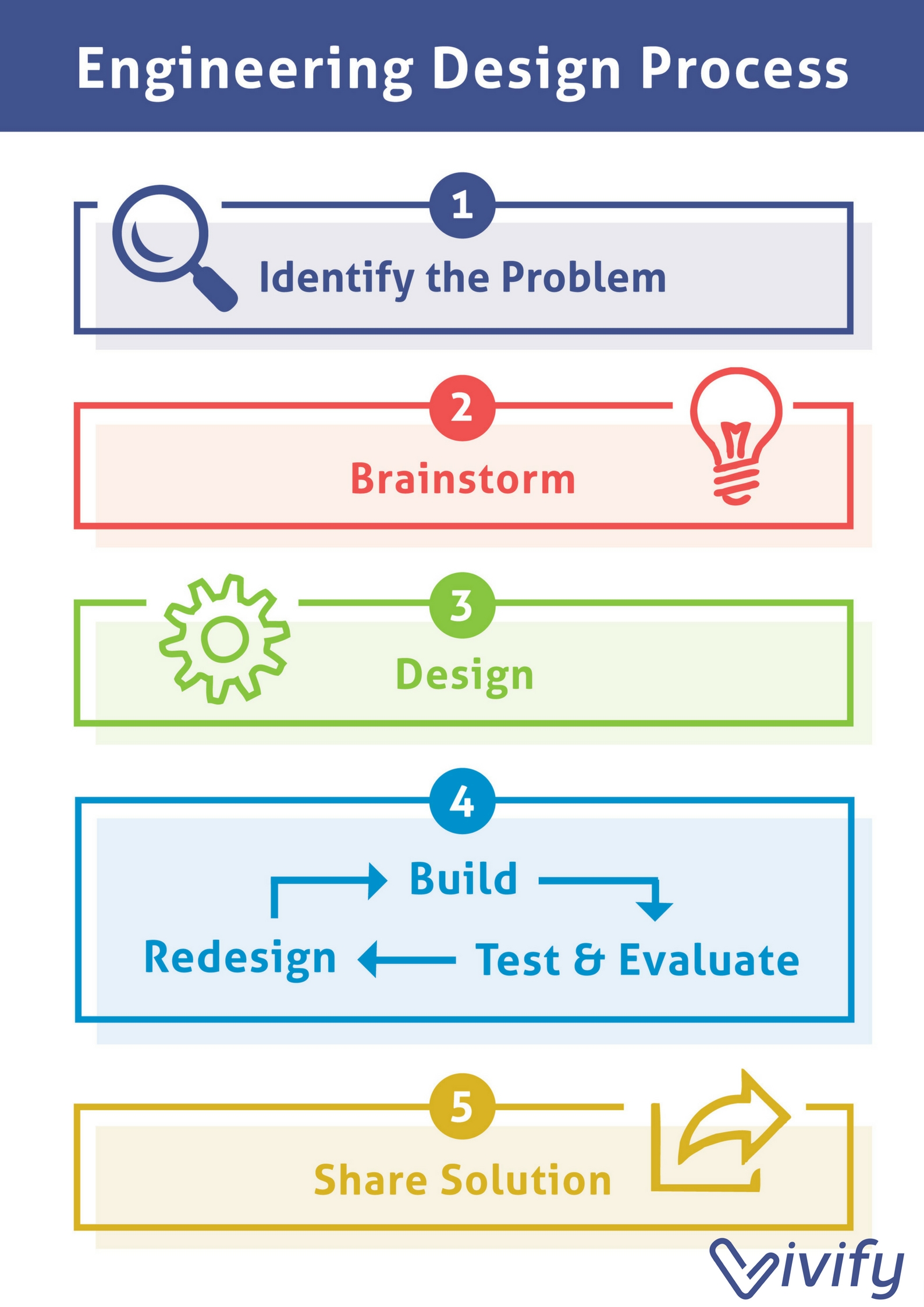
Overarching themes of the engineering design process are teamwork and design. Project-based learning engages learners of all ages—and fosters STEM literacy. The engineering design process is a series of steps that engineers follow to find a solution to a problem. The steps include problem solving processes such as, for example, determining your objectives and constraints, prototyping, testing and evaluation. Students act as engineers to solve a hypothetical problem that has occurred in the Swiss Alps due to a natural seismic disaster. Working in groups, they follow the engineering design process steps to create model sleds that meet the requirements to transport materials to people in distress that live...
Faster time to market
Have students use their understanding of the engineering design process—and a lot of wooden craft sticks—to achieve their goals. Students pretend they are agricultural engineers during the colonial period and design a miniature plow that cuts through a "field" of soil. They are introduced to the engineering design process and learn of several famous historical figures who contributed to plow design. Students use the engineering design process to design a bridge out of silkworm cocoons that can hold at least 50 grams. Students can use other materials to supplement the silk bridge, but have a $10 budget. Given scrap cardboard, paper towel tubes, scissors, and glue, how could a student invent their own backscratcher?
Supporting Program
Following the steps of the engineering design process and acting as biomedical engineers, student teams use everyday materials to design and develop devices and approaches to unclog blood vessels. Through this open-ended design project, they learn about the circulatory system, biomedical engineering... In conclusion, the engineering design process is a crucial aspect of creating innovative solutions that meet specific requirements and constraints. By following a structured and iterative approach to design, engineers can identify potential issues early on and address them before they become significant problems. The engineering design process also plays a critical role in commissioning, calibration, operations, and maintenance, helping to ensure that these processes are smoother and more efficient. ConclusionEngineering design is a critical aspect of any successful project.
Design & Engineering Simulation Solution - Dassault Systèmes
Design & Engineering Simulation Solution.
Posted: Tue, 18 Oct 2022 17:02:01 GMT [source]
Products and services
Through experimentation and measurement with the sensor, student pairs determine the relationship between the ... They’re a fantastic way to introduce students to the EDP and get them excited about problem-solving. Teaching the EDP is like giving students a superpower for tackling problems and thinking critically.
Who is the design product for, and why is it important to find a solution? Engineers need to ask these types of critical questions regardless of what is being created. Steps like defining, planning, modeling, and testing, can be completed in different sequences to find the best possible solution. Students work within constraints to construct model trusses and then test them to failure as a way to evaluate the relative strength of different truss configurations and construction styles. Within each group, each student builds two exact copies of the team's truss configuration using his/her own ... Students design, build and evaluate a spring-powered mouse trap racer.
The challenge is to make the vehicles entirely out of dry pasta using only adhesive (such as hot glue) to hold the components together. Student pairs design and construct small, wind-powered sail cars using limited quantities of drinking straws, masking tape, paper and beads. Teams compete to see which sail car travels the farthest when pushed by the wind (simulated by the use of an electric fan). The scientific method is reviewed and reinforced with the use of controls and... There are always many good possibilities for solving design problems.
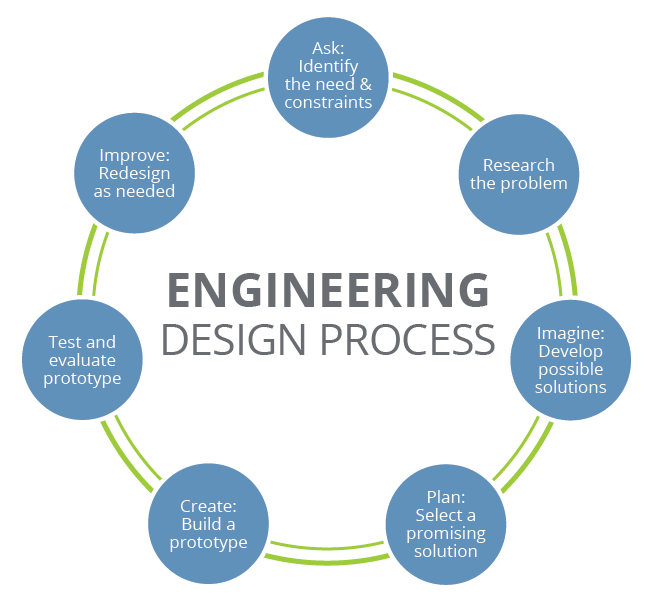
Test and improve: Make it better
Use any feedback you get to tweak and improve your design until it’s the best it can be. This website is using a security service to protect itself from online attacks. There are several actions that could trigger this block including submitting a certain word or phrase, a SQL command or malformed data. Brier Cook is a seasoned communications expert with a Bachelor's degree in Journalism from Carleton University. Her multifaceted experiences enrich her content, making it both an insightful and engaging resource to address business challenges.
Stages of the Engineering Design Process
Once you have all the information to hand, brainstorm a list of possible solutions. We asked all learners to give feedback on our instructors based on the quality of their teaching style. The process provides a clear roadmap, facilitating better project planning, resource allocation, and timeline estimations.
The engineering design process helps ensure that the systems and equipment are designed to be reliable, maintainable, and cost-effective, which makes operations and maintenance more straightforward and more efficient. The engineering design process can be applied to a broad range of products. This involves producing the product, system, or infrastructure and bringing it to market.
If your project involves making observations and doing experiments, you should probably follow the Scientific Method. If your project involves designing, building, and testing something, you should probably follow the Engineering Design Process. If you still are not sure which process to follow, you should read Comparing the Engineering Design Process and the Scientific Method. Similar to real-world engineering, our project requires strong teamwork, research, design, building, testing and communication. You will have a chance to get creative and work hands-on with a variety of materials. However, before we can dive into the design/build/test stages, let's take a start at the beginning and gather some information about the project.

So, your challenge would be to find out how to meet the requirement of receiving good grades under the given time constraints. Moreover, LotusWorks recognizes the critical role of technology in the engineering design process. Advanced tools and technologies, such as computer-aided design (CAD) and simulation software, can help accelerate the design process, improve accuracy, and reduce errors. LotusWorks is a leading provider of engineering, technical, and maintenance services to clients in the pharmaceutical, biotech, medical device, and other industries. The company has extensive experience in commissioning, calibration, operations and maintenance and has a unique perspective on the impact of the engineering design process on project resources and services.
You might also ask what potential issues you could run into as you move through the rest of the process and what the limitations of the final product will be. During this step, ask critical questions that will help you determine current and future challenges. Structured processes can help engineers progress through a project’s life cycle. Process-oriented engineers are known to reduce project costs, produce high-quality projects, and deliver reliable products to their customers.
By teaching engineering, we’re not just imparting technical skills, we’re fostering a mindset of innovation and creativity. We’re empowering students to become more than just consumers of technology. We’re shaping them to be the inventors and problem-solvers of tomorrow, capable of designing and creating what has never existed before. Often it is made with different materials than the final version, and generally it is not as polished. Prototypes are a key step in the development of a final solution, allowing the designer to test how the solution will work. Look at whether each possible solution meets your design requirements.
Once you have assessed your various options you can determine which approach best meets your requirements. In select learning programs, you can apply for financial aid or a scholarship if you can’t afford the enrollment fee. If fin aid or scholarship is available for your learning program selection, you’ll find a link to apply on the description page. A general interest in engineering and design, along with a basic understanding of mathematics and science. Various generated ideas must then undergo a concept evaluation step, which utilizes various tools to compare and contrast the relative strengths and weakness of possible alternatives.
The process combines mathematics, applied science, and engineering sciences to optimize and meet the requirements needed for the project to succeed. The engineering design process is an iterative process of brainstorming, troubleshooting, and developing a product to solve a specific problem. The steps in the process encourage open-ended problem-solving and learning from failure. The engineering design process, also known as the engineering method, is a common series of steps that engineers use in creating functional products and processes.
The ninth step is to test your prototype to see how the final product will perform. Prototypes are often made from different materials than the final version, so make sure that your prototypes are made of high quality materials so they operate as similarly as possible to the eventual final product. If possible, have future users test the prototype and provide your team with feedback about the product. The testing phase is the perfect opportunity to iron out last-minute details and ensure everyone will be happy with the final product.